Case Study · Atwater, CA · 2026-05-19 · Escrow Inspection Save
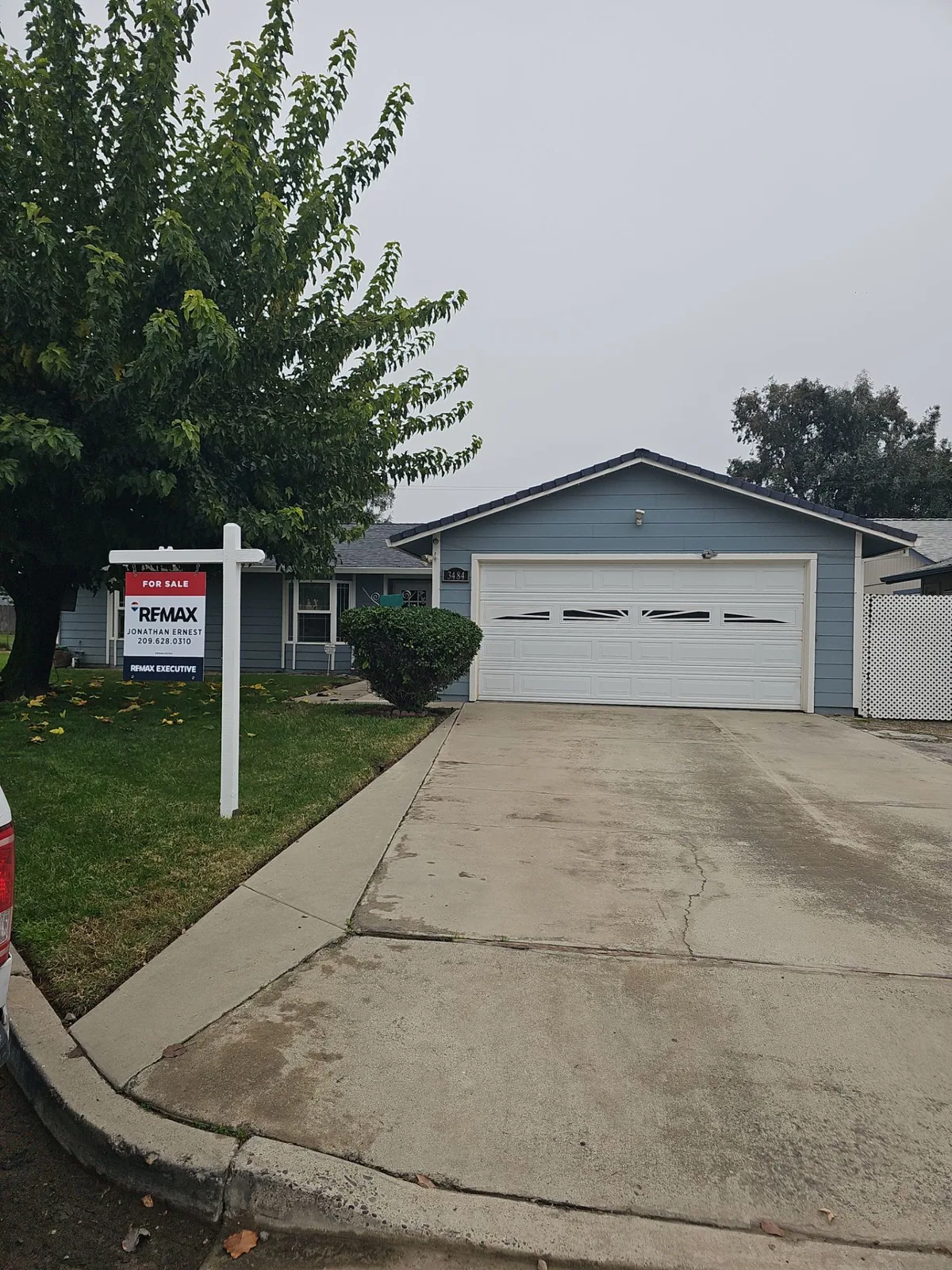
Atwater Residential Roof Replacement at 3484 Virginia Street
When a buyer’s inspector flagged five roof issues during escrow on this Atwater home, the seller had a 14-day window before the buyer would walk. Here’s how we documented every issue, executed a full residential replacement, and closed the sale on time.
3484 Virginia Street, Atwater.
- Material:
- Architectural composition shingles with new chimney flashings, replaced 2x6 framing at back-side soffit/fascia transition, and new plumbing vent assembly
- Scope:
- Full tear-off and replacement on an occupied single-family home listed for sale. Inspector flagged five issues during the buyer’s due diligence period: cracked shingles with exposed nail pops, hidden dry rot in 2x6 framing, a clogged front gutter sheeting water behind the fascia, a loose 4" plumbing vent cap, and failed chimney flashings. We documented and corrected all five.
- Location:
- 3484 Virginia Street, Atwater CA 95301 · Merced County
- Completed:
- May 2026 · inside the buyer’s 14-day inspection contingency window


The escrow timeline: 14 days to satisfy the inspector
The call came in on day 3 of the buyer’s 14-day inspection contingency. The seller had accepted an offer on the Atwater property, and the buyer’s licensed home inspector had just walked the roof. The report itemized five separate roof-related findings — enough that the buyer’s agent indicated they’d either request a credit at close, demand the work be done before close, or walk from the deal entirely.
The seller called us that afternoon. We were on the property the next morning. By the end of that walkthrough we’d confirmed all five inspector findings, identified one extra issue the inspector hadn’t reached (the dry rot, which was hidden until tear-off), and committed to a full replacement that would finish before the contingency deadline.
What we found: the five forensic findings
Every line item from the buyer’s inspection report, documented with our own photos so the inspector, the buyer’s agent, and the seller all saw the same evidence.
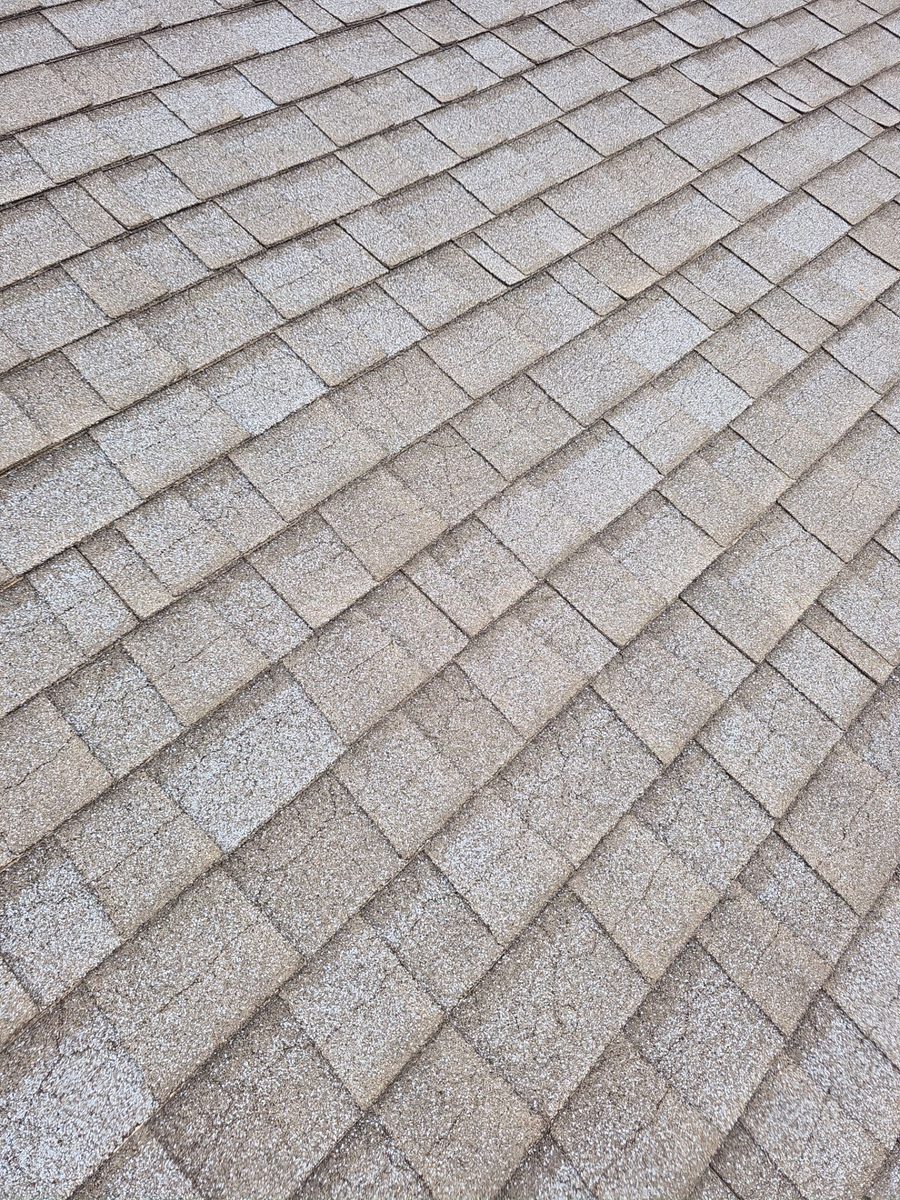
- Cracked composition shingles with exposed nail pops. Fastener back-out from years of thermal cycling — the shingles expand and contract daily, and the nails slowly back out of the deck. Once a nail pops, the shingle above it cracks, and water finds the deck. This was the primary “flag” on the inspector’s report.
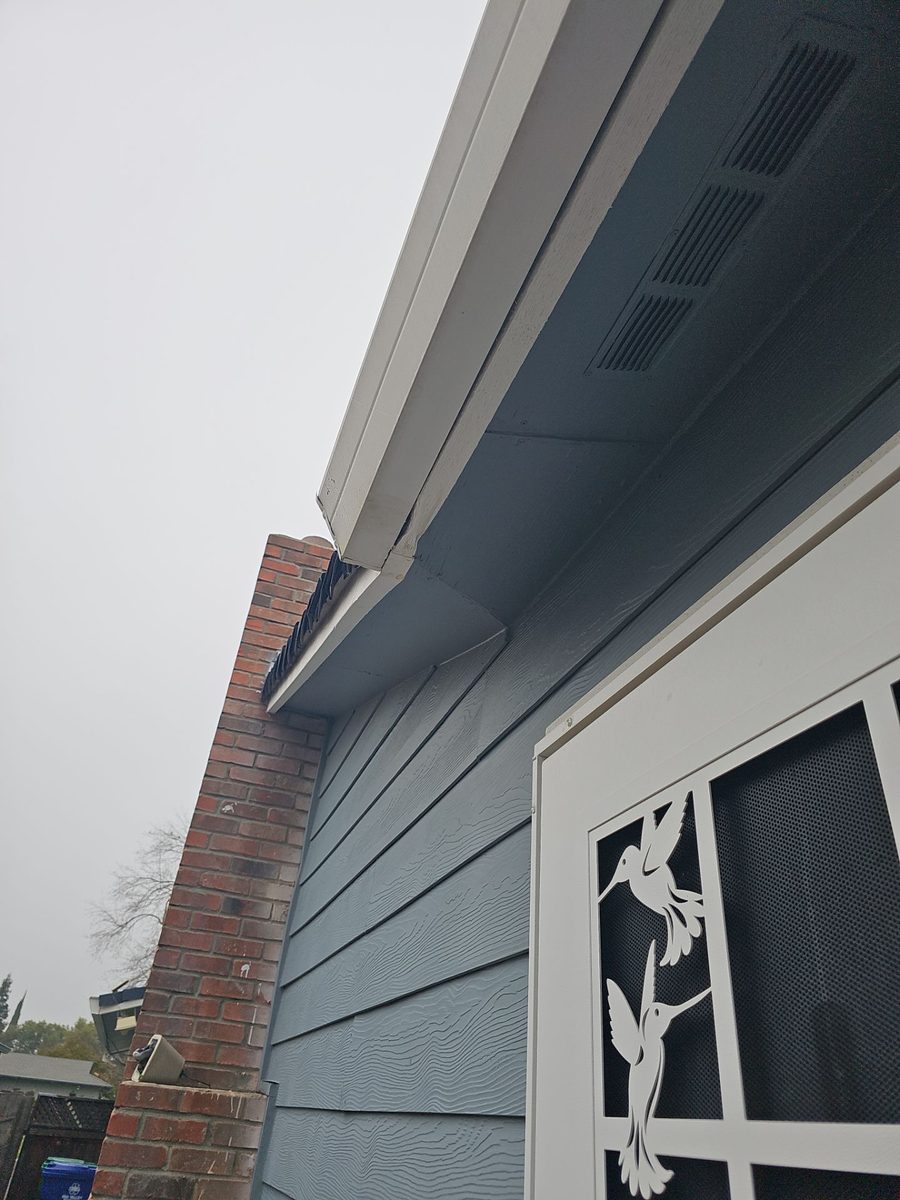
- Hidden 2x6 dry rot at the back-side soffit/fascia transition. Not visible from the ground and not flagged by the inspector — only exposed once we pulled the existing shingles and underlayment. Years of water sheeting behind the fascia (see finding #3) had rotted the 2x6 framing where the soffit meets the fascia. We replaced the rotted lumber before the new roof deck went down.
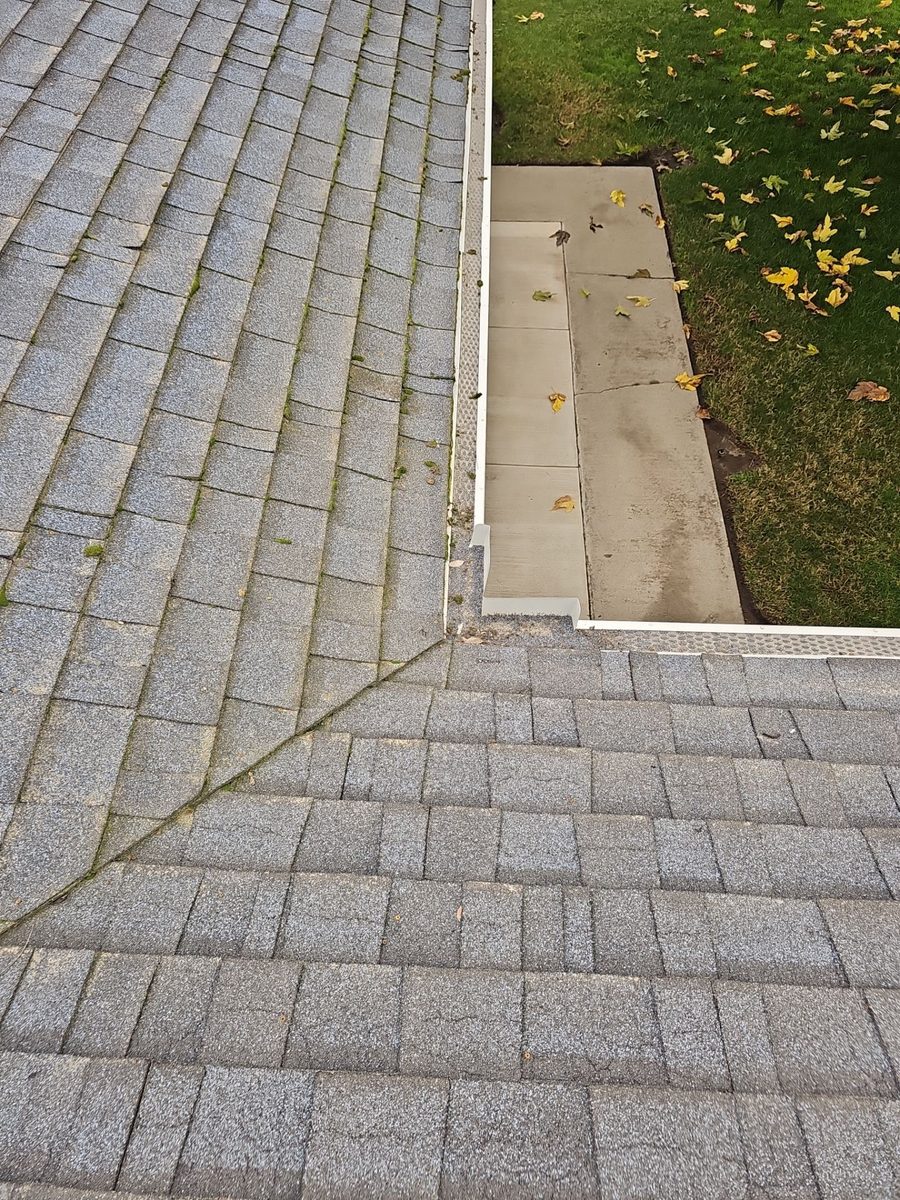
- Clogged gutter at the front of the house. Years of debris had blocked the front gutter; instead of draining to the downspouts, water was sheeting back over the fascia and tracking down the wall — a slow, invisible feed of moisture into the soffit framing. This is what caused the dry rot in finding #2. We cleaned the gutter and verified flow before the new roof went on.
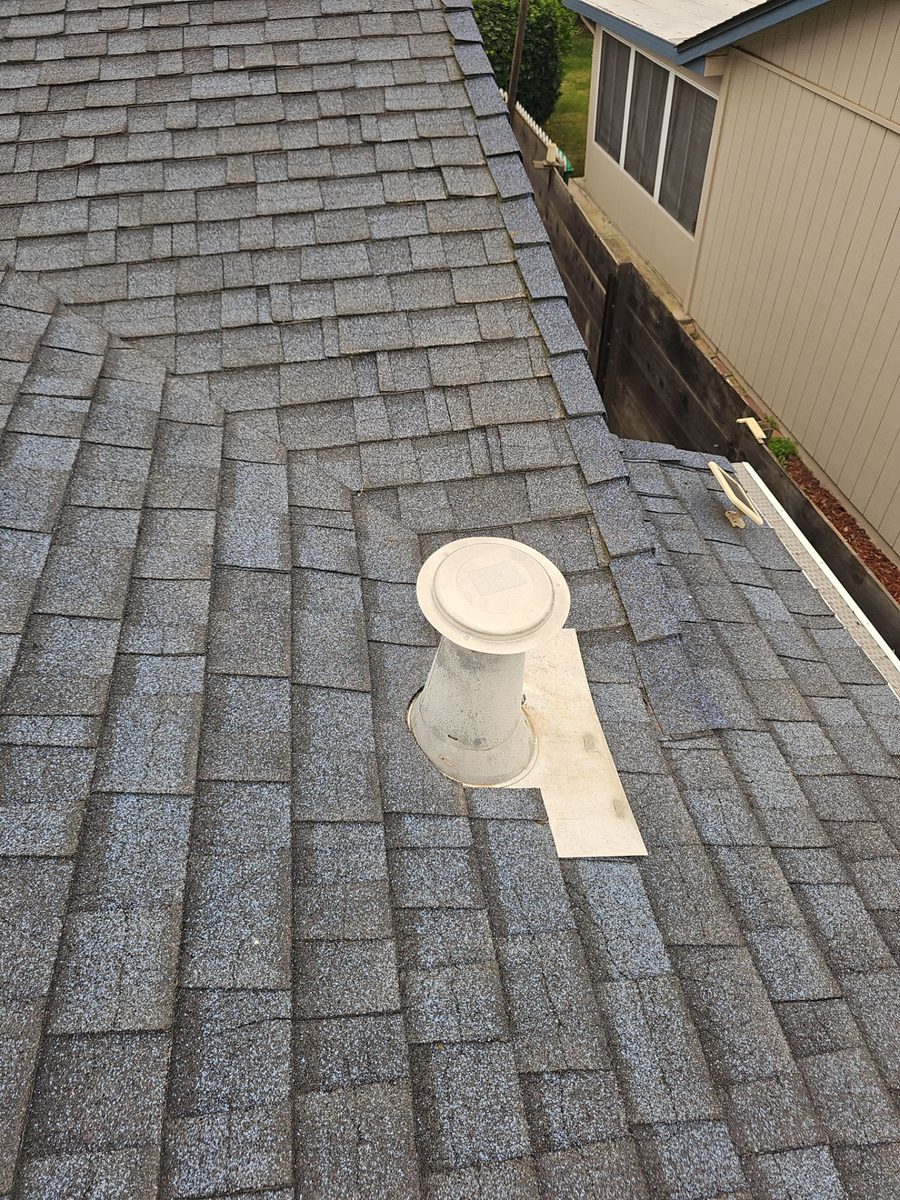
- Loose cap on a 4" plumbing vent assembly. The plastic boot was failing and the cap had backed off — a direct path for water into the attic on any wind-driven rain. Replaced with a new vent assembly and sealed to the new underlayment.
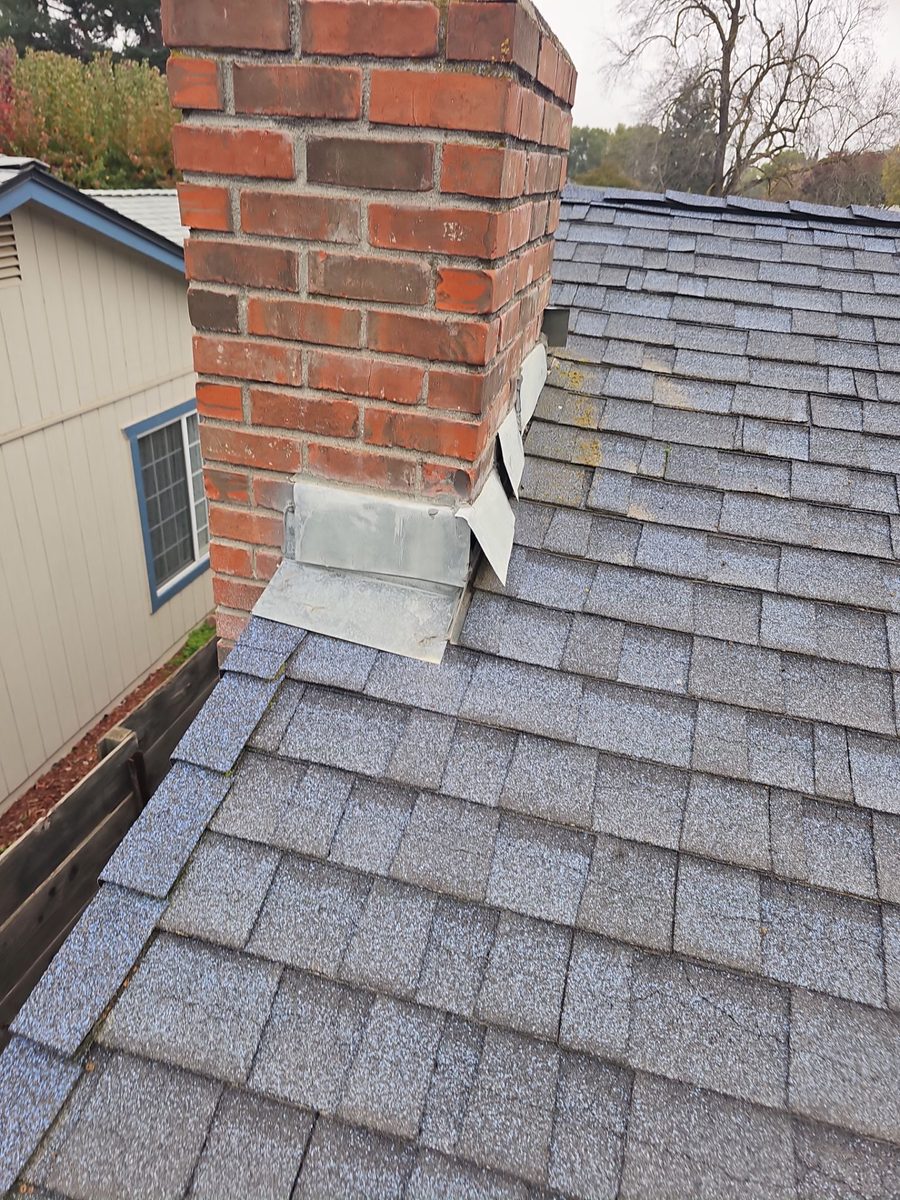
- Failed chimney flashings. The original step flashing and counterflashing around the brick chimney had separated, and caulk was the only thing holding it. Stripped down to brick, installed new step flashing tied into the new shingle courses, installed new counterflashing cut into the mortar joints — the way it should have been the first time.
The fix: full tear-off, replaced framing, new everything
A partial repair would have left the dry rot in place, left the chimney flashings limping along, and given the buyer’s agent a reason to come back for a second round of negotiations. We quoted a full replacement and scoped it to satisfy the inspector, the buyer, and the seller in one pass.
- Tear-off — complete removal of existing shingles, underlayment, and damaged flashings down to the deck.
- Framing repair — removed and replaced the rotted 2x6 at the back-side soffit/fascia transition; verified surrounding framing was sound.
- Deck prep & underlayment — deck cleaned, fasteners re-set, synthetic underlayment installed with ice-and-water shield at all penetrations and valleys.
- New architectural composition shingles — manufacturer-spec installation across the full roof, including starter course, ridge cap, and proper nail placement.
- New chimney flashings — new step flashing tied into the shingle courses; new counterflashing cut into the brick mortar joints.
- New plumbing vent assembly — replaced the failing 4" vent boot and cap; sealed to the new underlayment.
- Gutter cleared — front gutter cleaned out and flow verified before the new shingles went on, so the root cause of the dry rot wouldn’t come back.
- Documentation packet — written closeout with photos of every line item from the inspection report so the buyer’s agent had clean evidence to file with escrow.
The outcome: escrow closed on time
The buyer’s agent reviewed our documentation packet against the original inspection report — every finding addressed, every photo time-stamped. The buyer accepted, no second round of negotiations. The seller closed escrow on the original timeline. The new owners moved into a home with a brand-new roof, a new chimney flashing system, and a maintenance head-start instead of a deferred-maintenance bill three years out.
That’s what a roof inspection save looks like when it goes right: the inspector’s findings get treated as a punch list, not a negotiation tactic. Everyone signs.
If your home inspection flagged the roof during escrow
You have three options, and one of them is a trap:
- Offer the buyer a credit at close — fastest, but you’ll almost always pay more in credit than the actual repair would have cost, and a sharp buyer’s agent can use the roof finding to renegotiate other line items.
- Patch the specific items the inspector listed — cheap, but a second walkthrough often uncovers the issues underneath (hidden dry rot, marginal decking, failing underlayment). You can lose the deal a second time.
- Replace the roof and document every finding — the most expensive line item, but the only one that closes escrow cleanly and transfers a clean roof to the new owner. A documented full replacement with photos beats a patched repair in front of every buyer’s agent.
Most of our escrow-driven projects in Atwater, Merced, and across the Central Valley land in option three — and close on time. Free on-site assessment, written scope, and we’ll work to your escrow deadline.
Selling a home in Atwater? Get the roof handled.
Free on-site inspection. Written scope your buyer’s agent can hand to escrow. We’ll work to your contingency deadline.